Large trades
What it is
A large trade is a single market buy or sell above a threshold (on the chart, $1M and up by default). These are trades, not orders: the money has already been spent.
More: how we calculate it
- One trade is one exchange record: Bybit, Binance, OKX, Hyperliquid, Coinbase, Binance spot, OKX spot, Upbit, Bitget, Gate, Kraken.
- Chart threshold — a single trade from the chosen amount: "From $500k", "From $1M", "From $2M", "From $5M" or "From $10M", default "From $1M". The same value is used in alerts as the large-trade threshold.
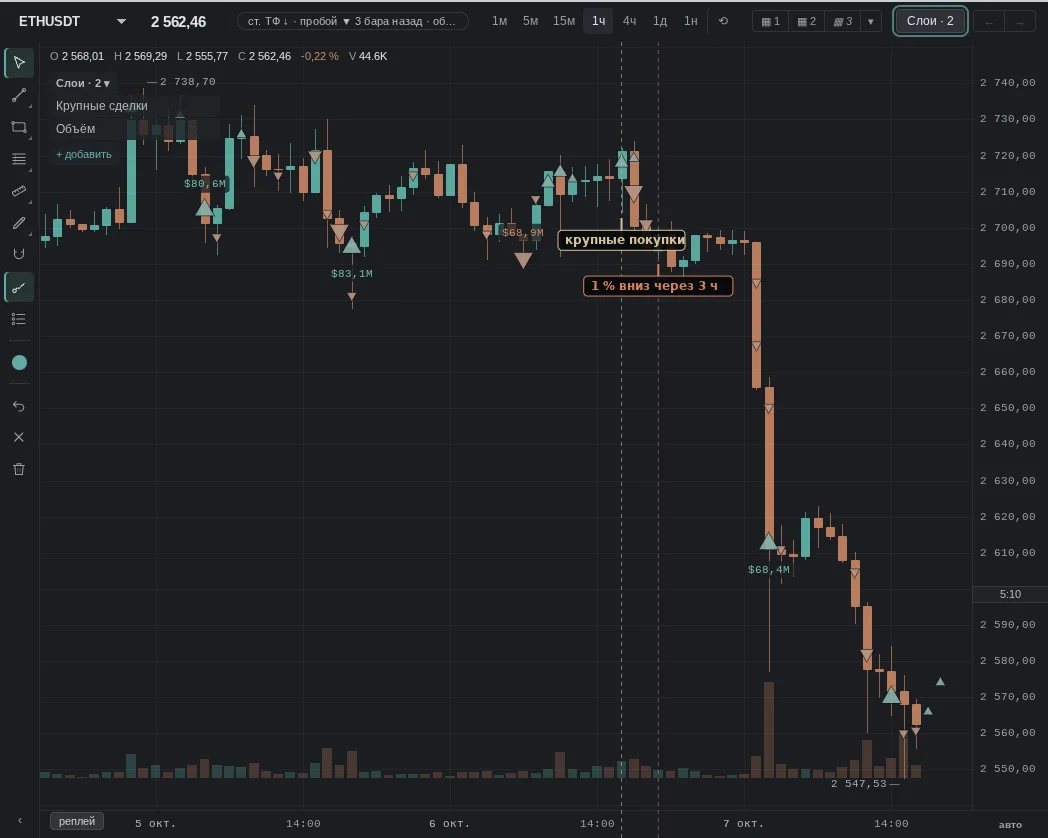
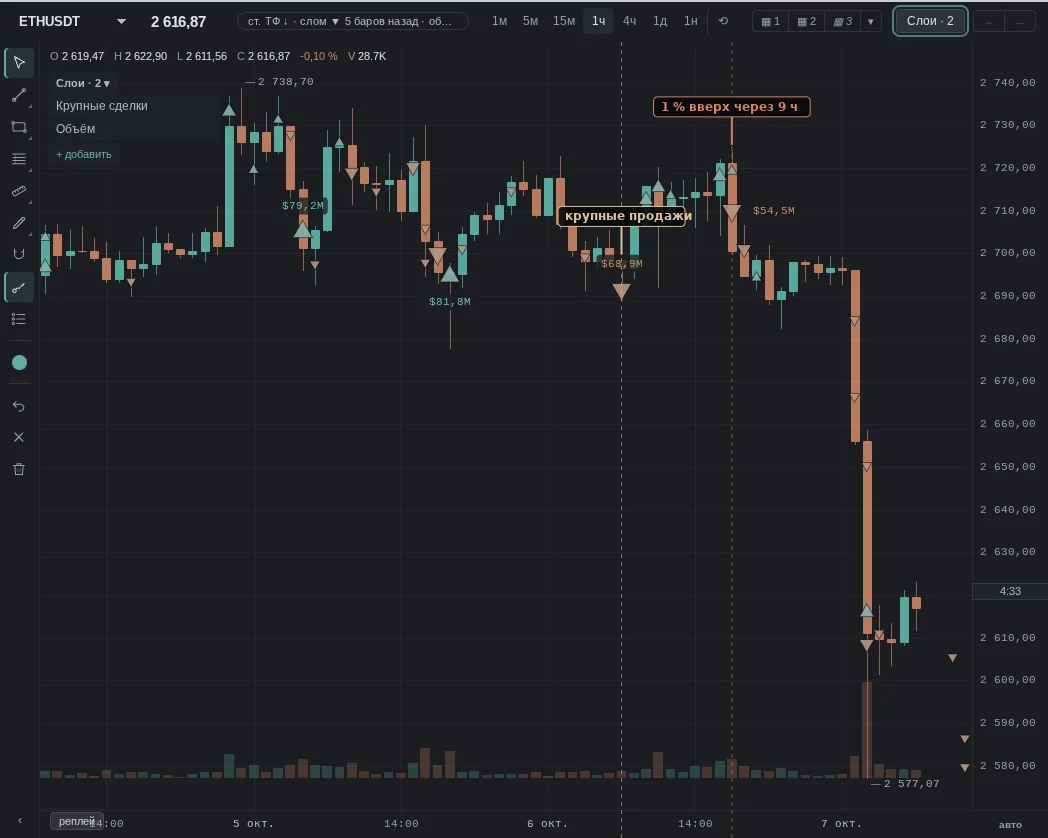
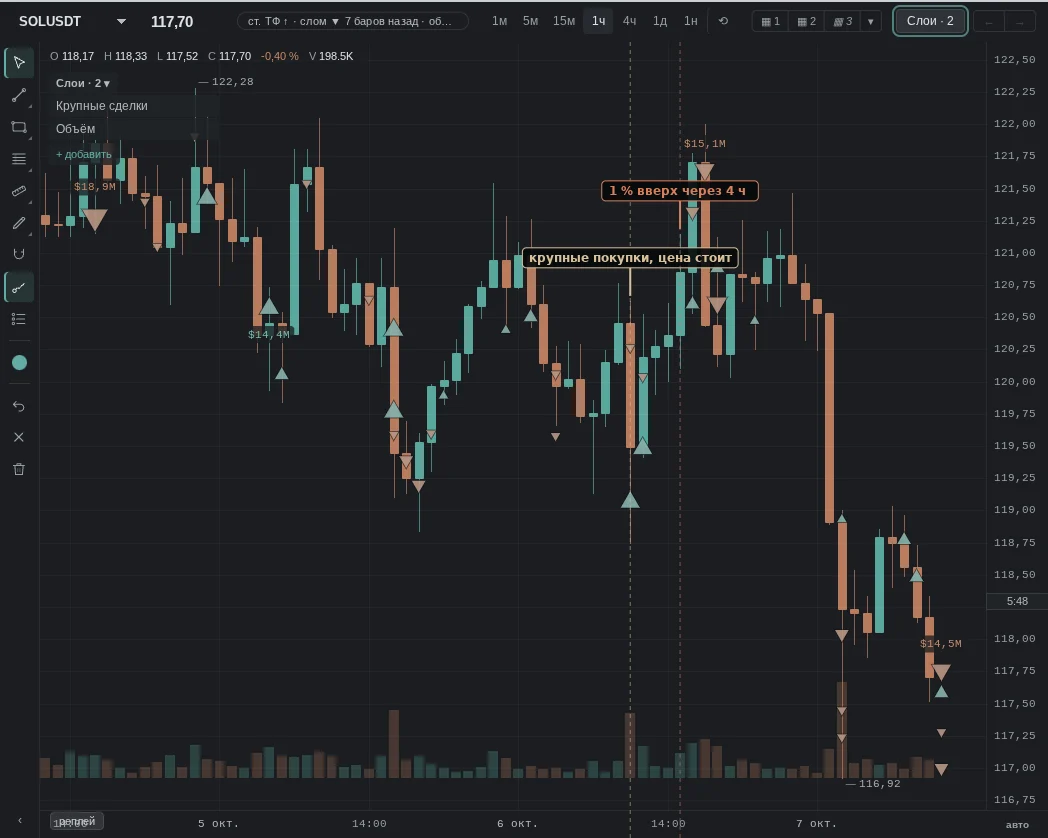
- On the chart — triangles: up — buy, down — sell; the larger the amount, the larger the marker.
- History on the chart — 7 days. Snapshots below — trades from $1M.
What it looks like in EVA
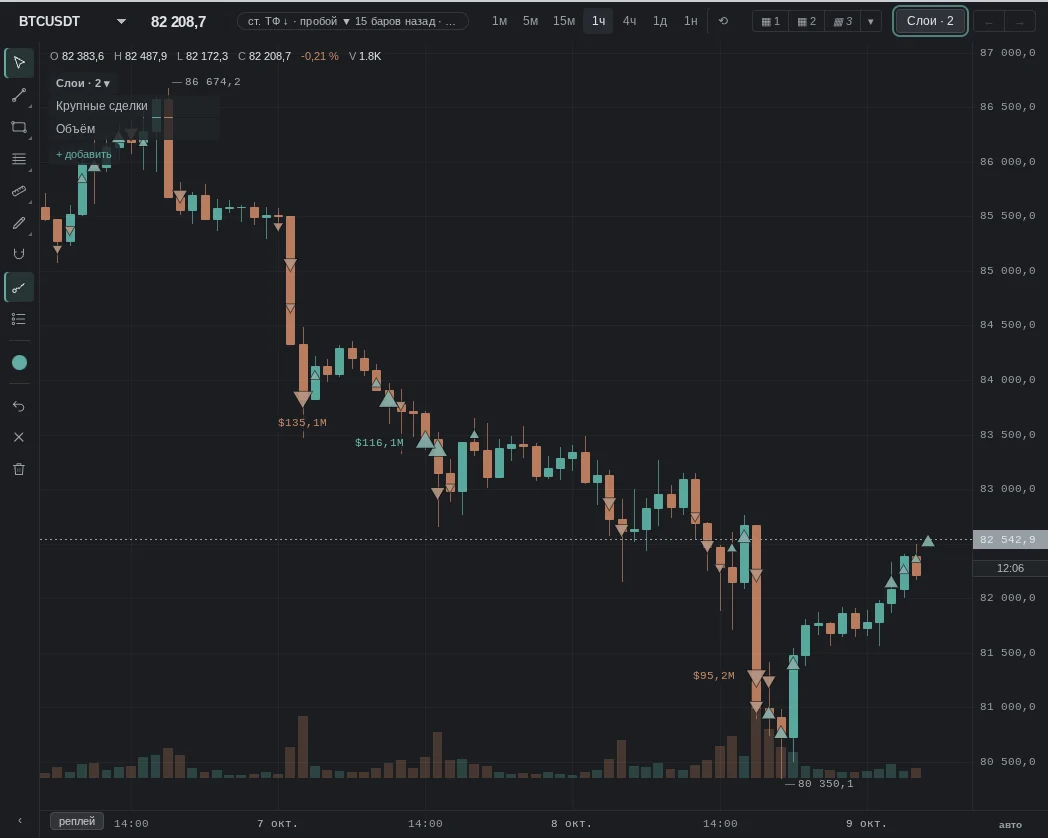
How it is read
Typical patterns: how traders read them and use them, and for each one a real moment from our history where it played out as a "textbook case". Moments where the same pattern failed are below, in "When it does not work".
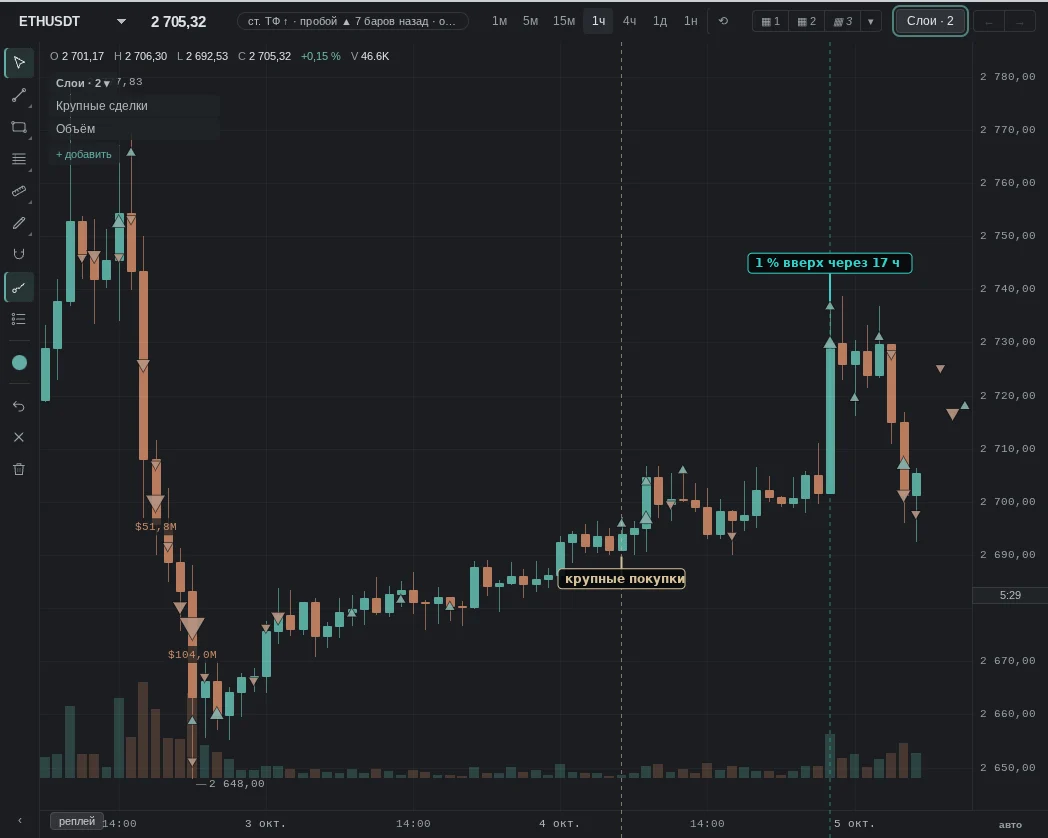
1. An hour of large market buys, price rising
How traders read it: large players are buying at market and moving the price. Many look for an entry in their direction.
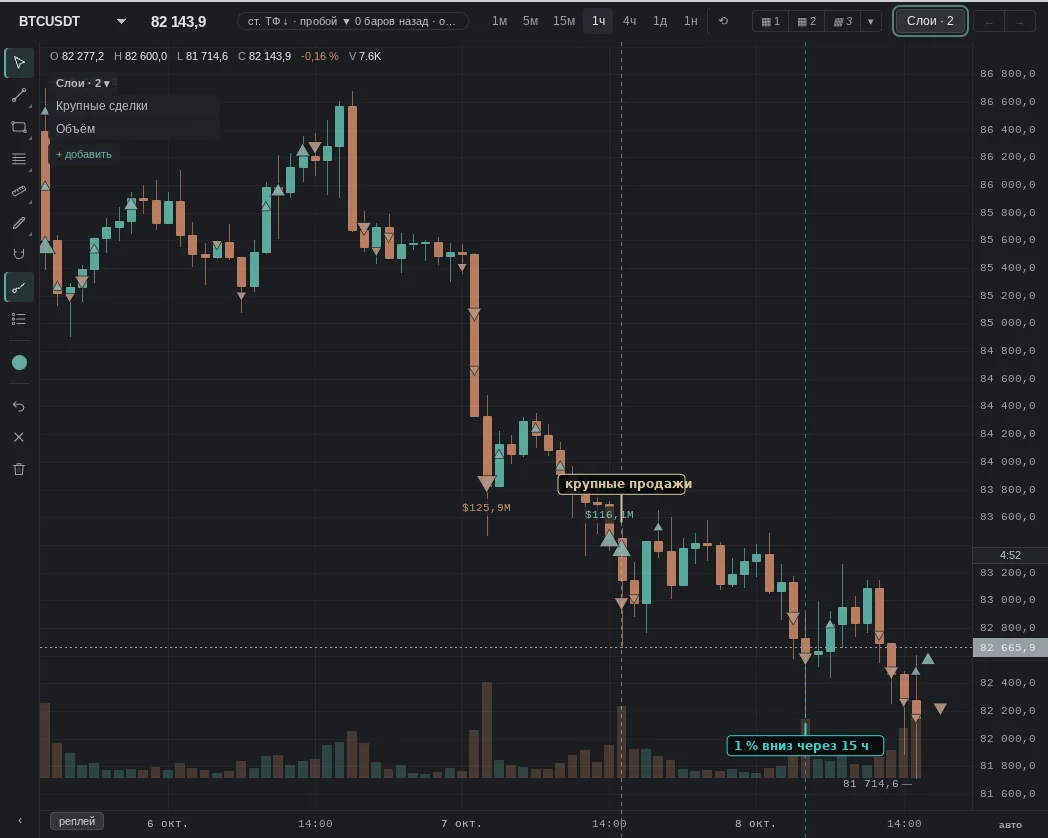
2. An hour of large market sells
How traders read it: large players are selling at market. Many look for a continuation down.
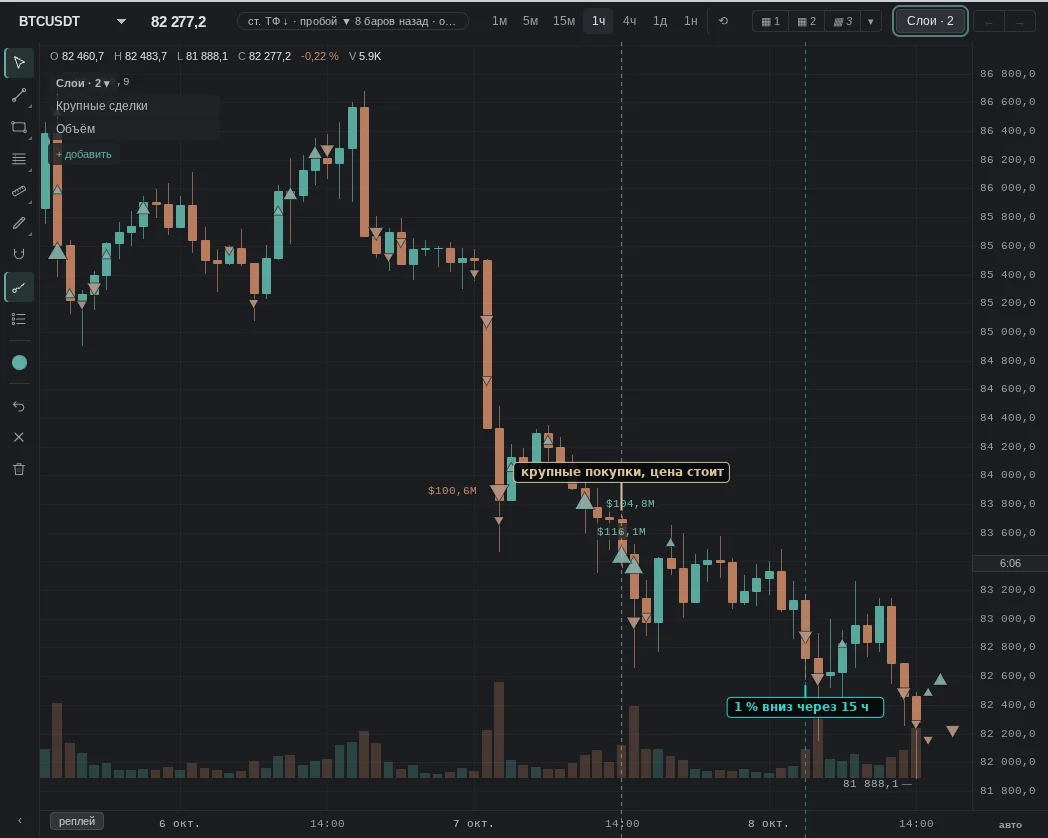
3. Large buys, but the price stands still
How traders read it: lots of large buys, yet the price barely moved — sellers "absorbed" them with limit orders. Read as resistance.
When it does not work
No pattern works every time: a large trade explains better who came in with money than it tells where the price will go.
The same patterns — moments from our history where they failed.
Common traps
- Liquidations also arrive as large market trades — they are not someone's decision but a forced close by the exchange.
- Splitting: a large player may hit in small pieces — the threshold will not see them.
- Hedge: a large futures buy may be insurance for a spot position rather than a bet on a rise.
- One threshold for all coins: $1 M is an ordinary trade for BTC and a rarity for a small coin; you cannot compare "how many large trades" across coins.
See also
- Liquidations — whether these are forced trades.
- Order Book — what "absorbed" them.
- CVD — whether the whole crowd is going the same way.
- OI — whether positions are opening or closing.
In the terminal: Large trades
Market trades of a large size that already happened — dots on the chart: size is the amount, color is the side. The threshold, from $500,000 to $10M, is in the layer settings; Telegram alerts use the same one.
These are trades, not positions: a $5M buy can open a position or close one.
The large-trade tape in the right column (⚙ above the tape): filter by amount and side, buy/sell balance, sound on a large trade — while the tab is open; more than 10 per minute pauses the sound until “resume”. It sends nothing to Telegram: Telegram has its own large-trade alerts.